
We’re pleased to share a guest blog from Girlguiding member, Esther, who is part of Inspire – for volunteers and members aged 18-30.
Ever wanted to learn more about climate change and what you yourself can do to tackle it? Esther has been researching the subject as part of their ‘beyond the UK’ Inspire journey.
Here’s what they have to share…




This is slightly different to other blog posts I have written, but does link, tenuously, to guiding. Through the ‘beyond the UK’ pathway of Inspire, I was challenged to complete an international badge. Soon, I discovered the YUNGA challenges. These are a set of challenges created by the Youth and United Nations Global Alliance based around a range of global issues such as water, soil, disaster risk reduction, and ending hunger. Intended to be used by young people all over the world, the badge packs contain a huge amount of information and practical activities to help us make a real life change in our world. You can find out more about them here.
After some consideration, I began the ‘climate change’ challenge, and the finaltask for me to finish the badge is to write a blog all about climate change – so here we go!
The climate is the general weather of an area – what it does most of the time, rather than what it is dong right now (that is the weather).
The earth’s climate has always changed gradually. You might have heard of the Ice Ages, when Earth’s climate was much colder. In recent history, however, human activity has caused the planet’s atmosphere to warm up much faster than it would naturally. This is because human activities such as farming, industry and burning fossil fuels release lots of greenhouse gases. These gases, including methane, carbon dioxide and water vapour sit in the atmosphere and trap heat from the sun, warming up our atmosphere.
This is such a huge question that I can’t really begin to answer it here, but it is our responsibility to keep the planet safe for future generations, plants and animals.
If global temperatures rise by just 4 degrees we could experience the following and more:
All this can lead to increased poverty, hunger and health issues for people worldwide.
Fantastic! You want to make a change in your life to help our planet and the people, animals, and plants which call it home. Here are 5 things you can do to make a difference:
There are lots of websites where you can find out your household’s carbon footprint. This gives you an idea of what your greenhouse gas emissions are like and what you could do to improve them. They require different amounts of information so here is a simple one from the WWF: https://footprint.wwf.org.uk.
Once you know what you need to change, do it! This might be small changes to save energy in your home such as taking shorter showers and getting energy efficient lightbulbs, right through to bigger actions like installing solar panels on your home, buying an electric car or buying more locally produced food.
Ok, so this one doesn’t directly impact climate change, but it is important. Learn about the area around you and how climate change has altered it so far. Then consider how climate change could further alter it in the future. Are there any natural hazards that will be more likely to happen where you live if the global temperature continues to rise? Learn more about these and their impact.
Planting and caring for a tree can help combat climate change as trees absorb and store carbon dioxide; one of the major greenhouse gases. Growing your own vegetables also helps reduce the emissions created by packing and transporting food.
You can also research which animals in your area are being impacted by climate change and what you can do to help them. For example in the UK more hot, dry periods are occurring. During these, setting out and maintaining bird baths can help animals access water.
Use resources available to you to support a group or charity working to combat climate change such as Friends of the Earth or Climate Action Network. There are loads of groups that focus on different aspects of climate change, so choose one to suit you. You can then volunteer with the group or raise money to support their cause. Perhaps you could hold a bring and buy sale or organise a sponsored event.
Use the internet or books to learn more about climate change and how to fight it. Get the message out there however you can. You could run meetings for your unit, do a presentation at school, share posts from reputable sources on social media, design posters, write to your local government, or even write a blog!
We recently caught-up with Madeleine, who has been a volunteer across our region and currently volunteers with Girlguiding North East.
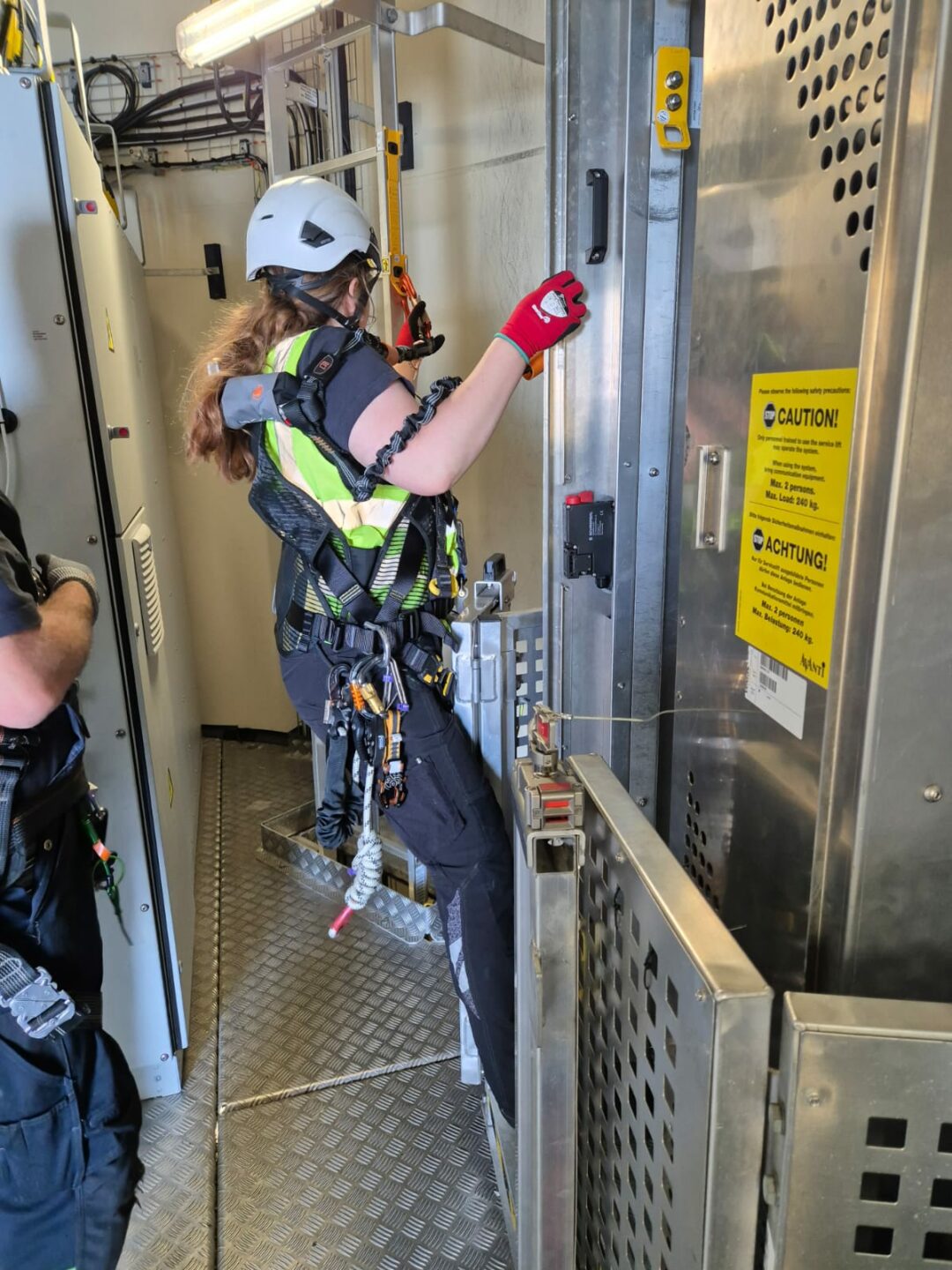
She has recently completed the RWE Wind Turbine Technician Apprenticeship.
Madeleine shared an insight into her experience of getting into the industry and told us why she thinks more young people should explore apprenticeships.
A: When I was looking at next steps after A-levels, I was looking at a few different apprenticeships and degree courses when I found one with RWE and applied for a few different courses out there. I was thrilled when I got the call back for this apprenticeship as it was one of the best structured for what I wanted from an apprenticeship.
I applied in Feb 2023, submitting a CV and cover letter, and then at the interview had a small test, one on one interview and group task. The process was pretty daunting as it was the first major interview that I had had, but getting support from family and friends practicing interview questions really helped!
A: From when choosing GCSEs and before then, I knew that engineering was my main goal of what job I wanted to go into. At GCSEs I chose engineering as an option, and my coursework project was to do with turning wind power into useful power. This, along with other research in physics and other subjects planted the seed that renewable energy was an industry that I wanted to get involved in.
When lockdown happened, I got involved in various online courses to further my knowledge in different areas, like cyber security, physics and micro computing. These helped build my foundation knowledge for A-level.
For A-levels I did Maths, Further Maths, Physics and Engineering. I was awarded the Arkwright engineering scholarship alongside my studies, where I received financial aid and a mentor from Balfour Beatty. My engineering A-level was 50/50 coursework/exam, and my coursework project I chose was to create a energy generation prototype that fits on children’s playpark equipment. This was a really interesting project for me to research and develop and I enjoyed developing the prototype.
Throughout my A-levels I worked for Aluminium Art, traveling to different craft fairs and festivals. At one of the festivals I was chatting to a customer talking about how I wanted to work in the wind turbine industry when I finished my A-levels, it turned out that she was head of power transmission for Siemens Energy. I got her details and kept in touch, and she acted as an extra mentor throughout my A-levels and put on a weeks work experience for me. This work experience helped solidify that working in the wind industry was the right one for me.
I chose an apprenticeship over the traditional degree route as it was something that lead straight into the industry that I wanted to go into, allowing me to earn as I learn and be exposed to actual industry, with heaps of potential to further my education as my career grows!
The wind industry is such a cool one to get involved in (in my opinion!) there are so many different engineering disciplines involved, and the apprenticeship route helps give you a good base knowledge on how the industry works.
In terms of advice, be proactive and take any opportunity offered to help find out what you like to do. There are so many programs out there that offer tasters of different jobs, like Stemettes, the Smallpeice trust and more, it’s better to try lots of different things out there before committing to something so you have a good idea on what is available out there. Willingness to learn new things is an amazing trait and can help you go far!
A: I have learnt so much since starting my apprenticeship back in 2023. To start off, it has opened so many doors for me, since starting I have taken part in the WorldSkills competition, coming 2nd in the UK in the renewable energy competition, I have been invited to take part in blade testing in Blythe, worked on a gas power station briefly and been invited to speak about my experience at many events! I have developed a lot in confidence because of this, and practiced communicating to various people at different events (and managed to speak twice on BBC radio about green skills).
In terms of hard skills, I have learnt all sorts in hydraulics, mechanics and electrics, applying college learning onsite in annual servicing and fault finding. I have also learnt different energy generation methods, specifically solar, that may help me in the future if I was to transition into another industry.
The main skills that it has developed in me has been confidence in talking to others, teamwork and resilience in changeable situations.
A: Exciting, Changeable, Interesting
Since starting as a rainbow many years ago, Guiding has encouraged me to develop new skills and be curious about the world around me. When starting as a leader I have been learning about how to do the same to inspire the next generation of young women to be confident in what they do, and be interested in the world. It has also greatly tested my resilience in planning and being adaptable, especially when organising camps as the first one I organised, thundered and lightninged for the majority of the weekend – learning how to adjust the plan when things don’t go the way expected has been an invaluable skill to learn!